
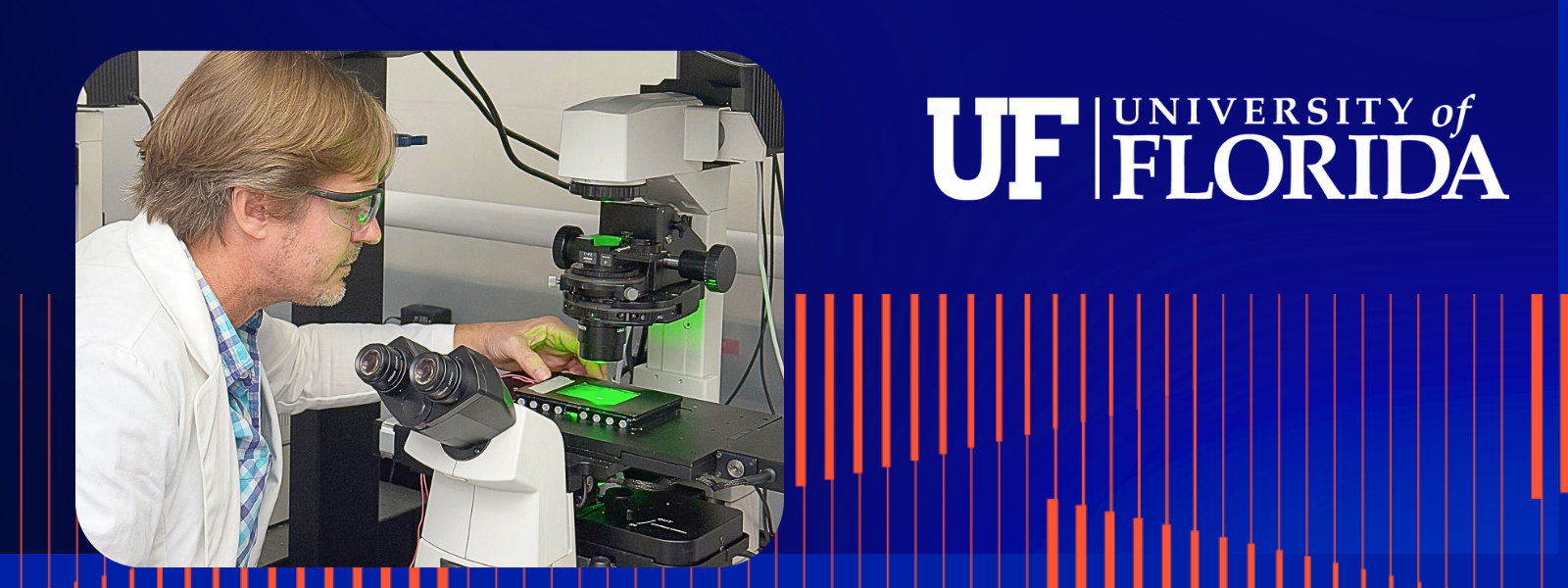
Backed by a $3 million grant from the National Science Foundation, a University of Florida research team is combining living cells with solid-state materials to develop better tools for environmental monitoring.
The idea revolves around biotechnology, which uses living organisms and biological processes to develop products and technologies. The UF engineering team plans to program living cells — from bacteria or sea anemones — like computers to create biosensors that can help determine harmful pathogens and toxins in the water in real time.
Ideally, this will make a critical safety process shorter; the quicker pathogens are detected in a water sample, the sooner the public is protected.

“In my view,” Angelini said, “we can get reliable, coherent and controllable new properties to emerge in systems made from living cells if we arrange them in crystalline patterns and we use synthetic biology to program them specifically for being arranged in crystals. We can basically remake solid-state physics, where cells replace the atoms.”