

Education
- PhD Mechanical Engineering, University of Florida 2013
- MS Mechanical Engineering, University of Florida 2006
- BS Mechanical Engineering, University of Florida 2004

Education
Ph.D., 1990, Auburn University
Professional Memberships and Fellowships
American Institute of Aeronautics and Astronautics, Member
Research Interests
Dynamics and control of multibody systems, game theory, orbital dynamics, flight mechanics.
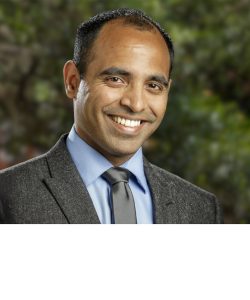

Piran R. Kidambi is an Associate Professor at the Department of Mechanical and Aerospace Engineering at the University of Florida since Fall 2025. Prior to this he was a Harrington Faculty Fellow at the University of Texas at Austin (2024-2025) and Assistant Professor at the Departments of Chemical and Biomolecular Engineering as well as Mechanical Engineering, Vanderbilt University (2017-2024). After receiving his PhD from the University of Cambridge (2014), he pursued postdoctoral research at MIT (2014-2017) through a Lindemann Trust Fellowship. Kidambi’s research leverages the intersection between (i) nanomaterial synthesis, (ii) process engineering, and (iii) in situ metrology, to enable bottom-up materials design and synthesis for hydrogen economy, next-generation energy, separations, national security, and healthcare applications. .
Education
Ph.D., 2014, University of Cambridge
Notable Awards
2024-2045 Donald D. Harrington Faculty Fellowship at UT Austin
ASME Rising Star (2024)
AIChE NSEF Young Investigator (2023)
DOE Early Career Award (2022)
ACS PMSE Young Investigator (2022)
NSF CAREER (2020)
ECS Toyota Young Investigator (2020)
Ralph E. Powe Junior Faculty Award (2018)

Jia “Peter” Liu is an Associate Professor and the Trey Lauderdale Industrial and Systems Engineering Faculty Fellow at the University of Florida. His research interests include statistical learning, deep learning, and AI with applications in advanced manufacturing. He focuses on integrating physics knowledge and data-driven machine learning to enhance the understanding of additive manufacturing (particularly process optimization and fatigue performance of laser powder bed fusion). He also works on smart manufacturing and secure manufacturing, with applications in the aerospace, defense, and automotive sectors.
His research has been funded by NSF, DoD, FAA, and NIST. He has published over 50 journal and conference papers and has been honored with several awards, including the 2024 ASME Rising Star of Mechanical Engineering and the 2023 NSF CAREER Award. He is a senior member of INFORMS, a member of IISE, IEEE, ASME, and SME. He holds a Ph.D. in Industrial and Systems Engineering, an M.S. in Statistics from Virginia Tech, and a B.S. and M.S. in Electrical Engineering from Zhejiang University, China.
Research/teaching interests:
Statistical modeling, machine learning, and data analytics for additive manufacturing.
In-situ sensing, ex-situ inspection, materials characterization, and reliability analysis for metal additive manufacturing.
Privacy-preserving information sharing and large-scale multimodal modeling for manufacturing.
Publications:
1. Li, A., Liu, J. (2026), “FedCOT: Personalized Federated Transfer Learning with Conditional Optimal Transport for Manufacturing Predictive Modeling”, IEEE Transactions on Automation Science and Engineering, 23, 6363-6382. 10.1109/TASE.2026.3673201.
2. Li, A., Poudel, A., Shao, S., Shamsaei, N., Liu, J. (2025), “Nondestructive Fatigue Life Prediction for Additively Manufactured Metal Parts through a Multimodal Transfer Learning Framework”, IISE Transactions, 57(11), 1344–1359. https://doi.org/10.1080/24725854.2024.2397383.
3. Mahmood, S., Baugh, L., Lee, S., Ahmad, N., Silva, D., Vinel, A., Liu, J., Shao, S., Shamsaei, N., Jackson, R., Schulze, K. (2025), “A comparative analysis of non-destructive surface topography measurement techniques for additively manufactured metal parts”, Additive Manufacturing, 105, 104791, DOI: 10.1016/j.addma.2025.104791.
4. Ahmad, N., Irfan, S.*, Maleki, E., Lee, S., Liu, J., Shao, S., Shamsaei, S. (2025), “Determining critical surface features affecting fatigue behavior of additively manufactured Ti-6Al-4V”, International Journal of Fatigue, 197, 108956, DOI: 10.1016/j.ijfatigue.2025.108956.
5. Liu, J., Ye, J., Silva, D., Vinel, A., Shamsaei, N., Shao, S. (2023), “A Review of Machine Learning Techniques for Process and Performance Optimization in Laser Beam Powder Bed Fusion Additive Manufacturing”, Journal of Intelligent Manufacturing, 34 (8), 3249-3275.
6. Poudel, A., Yasin, M., Ye, J., Liu, J., Vinel, A., Shao, S., Shamsaei, N. (2022), “Feature-based Volumetric Defect Classification in Metal Additive Manufacturing”, Nature Communications, 13 (1), 6369.
7. Li, A., Baig, S., Liu, J., Shao, S., Shamsaei, N. (2022), “Defect Criticality Analysis on Fatigue Life of L-PBF 17-4 PH Stainless Steel via Machine Learning”, International Journal of Fatigue, 163, 107018.
Notable awards:
NSF Faculty Early Career Development Program (CAREER) Award, 2023
ASME Rising Star of Mechanical Engineering, 2024
NIST Additive Manufacturing Benchmark Test Series (AM Bench 2025 Challenges) Winner, 2025
Trey Lauderdale Industrial and Systems Engineering Faculty Fellow, 2025-2028

Amor A. Menezes is an Associate Professor of Mechanical and Aerospace Engineering at the University of Florida, with affiliate appointments in Biomedical Engineering, Agricultural and Biological Engineering, Genetics, and Chemical Engineering. He is a member of the National Academies of Sciences, Engineering, and Medicine Standing Committee on Advances and National Security Implications of Transdisciplinary Biotechnology. His research focuses on modeling and controlling biological processes for medical and space applications. His group develops feedback control systems for inflammation-mediated coagulation disorders; advances the theory of biomolecular positive dynamical systems; designs integrated space biomanufacturing systems; and genetically engineers microbes to reject extreme environments. As Principal Investigator of three multi-university experiments launched to the International Space Station, he established the viability of space microbial biomanufacturing. From 2017-2023, he was Science Principal Investigator of NASA’s Center for the Utilization of Biological Engineering in Space. Prof. Menezes’ research was recognized by the NSF CAREER award, the Synthetic Biology Leadership Excellence Accelerator Program, and the Emerging Leaders in Biosecurity Initiative. He has contributed to the Engineering Biology Research Consortium’s “Engineering Biology for Space Health Roadmap”, the White House Office of Science and Technology Policy workshop on “Homesteading in Space”, and the National Intelligence Council Strategic Futures Group’s “Global Trends Report”. He is an Associate Editor of the IEEE Control Systems Society Technology Conference Editorial Board and the ASME Modeling, Estimation and Control Conference Editorial Board. He is a Senior Member of IEEE and a Member of AIAA, ASME, and ASGSR. Prof. Menezes received a Ph.D. in aerospace engineering from the University of Michigan, and completed postdoctoral training in aerospace engineering and bioengineering at the University of Michigan and the University of California, Berkeley, respectively.
Education
Postdoc, 2016, University of California, Berkeley;
Postdoc, 2011, University of Michigan;
Ph.D., 2010, University of Michigan;
M.S.E., 2006, University of Michigan;
B.A.Sc., 2005, University of Waterloo
Professional Memberships and Fellowships
American Institute of Aeronautics and Astronautics, Member
American Society for Gravitational and Space Research, Member
American Society of Mechanical Engineers, Member
Institute of Electrical and Electronics Engineers, Senior Member
Teaching Interests
Modeling and Control of Biological Systems, Control of Linear and Nonlinear Systems, and Aircraft and Spacecraft Performance and Control.
Research Interests
Biological Control Systems, Biosecurity, Cellular Engineering, Nonlinear Control, Synthetic Biology, and Systems Biology.

Jonathan Scheffe is an Associate Professor in the Department of Mechanical and Aerospace Engineering at the University of Florida. Prof. Scheffe’s research is focused on the conversion and storage of solar energy in the form of renewable fuels/electricity through thermochemical routes. He is the former chair of the American Society of Mechanical Engineers (ASME) Solar Energy Division and has co-authored more than 35 peer received publications in the field of solar thermal energy conversion. Prof. Scheffe receives research funding from the U.S. Department of Energy, Florida Department of Transportation, Qatar National Research Foundation and Industry.
Education
Ph.D., 2010, University of Colorado, Boulder
Professional Memberships and Fellowships
The American Society of Mechanical Engineers, Member
Teaching Interests
Thermodynamics, heat transfer, kinetics, solar engineering
Research Interests
Solar thermochemical and electrochemical energy conversion, defect chemistry and thermodynamics of nonstoichiometric oxides

Professor Xin Tang received his Post-doctoral training from Harvard University and Ph.D. from University of Illinois at Urbana-Champaign. His research centers at the interface of engineering, physics, chemistry, and biology. His lab studies cell and molecular mechanics in cancer, cardiovascular system, and neurons; unconventional mechano-electrophysiology; quantitative in vivo/vitro functional bio-imaging; AI/ML-powered bio-nanotechnology; and development of new biophysical tools to probe biological function/structure. His research is supported by NIH, NSF, AFOSR/DoD, UF Health Cancer Center, UF Opportunity Funds, and etc. He was awarded the NIH Maximizing Investigator’s Research Award (R35), American Association for Cancer Research (AACR) Tumor Microenvironment (TME) Junior Investigator, Researcher of the Year 2024 Award in the Department of Mechanical & Aerospace Engineering, NIH/NCI-designated UF Health Cancer Center Rising Star of the 2024 Year Award, and Faculty Advisor/Mentor of the Year 2025 Award in the Herbert Wertheim College of Engineering.
Education
Postdoc, 2017, Harvard University
Ph.D., 2013, University of Illinois at Urbana-Champaign
Teaching Interests
Active Soft Matter Biophysics; Biomechanics at Molecular, Cellular and Tissue Scales; Quantitative Optical Bio-imaging; Continuum Mechanics; and Finite-element Analysis
Research Interests
Biomechanics, Mechanobiology and Soft Matter: Cell and molecular mechanics in cancer development and metastasis, cardiovascular system, and neurons; unconventional mechano-electrophysiology; quantitative in vivo/vitro functional bio-imaging; bio-nanotechnology; and development of new biophysical tools to probe biological function/structure.
Recent Publications
Yin Xin, Keming Li , Miao Huang, Chenyu Liang, Dietmar Siemann, Lizi Wu, Youhua Tan, and Xin Tang, Biophysics in tumor growth and progression: from single mechano-sensitive molecules to mechanomedicine. 2023, Oncogene (Nature), https://www.nature.com/articles/s41388-023-02844-x.pdf.
Note: This article is selected as “The best of Oncogene 2023″.
Chenyu Liang, Qian Zhang, Xin Chen, Jiawei Liu, Mai Tanaka, Shu Wang, Sharon E. Lepler, Zeyuan Jin, Dietmar W. Siemann, Bo Zeng, and Xin Tang, Human cancer cells generate spontaneous calcium transients and intercellular waves that modulate tumor growth, Biomaterials (Impact Factor: 15.3), 2022, 290, 121823, https://www.sciencedirect.com/science/article/pii/S014296122200463X.
Chenyu Liang, Miao Huang, Tianqi Li, Lu Li, Hayley Sussman, Yao Dai, Dietmar W. Siemann, Mingyi Xie, and Xin Tang, Towards an integrative understanding of cancer mechanobiology: calcium, YAP, and microRNA under biophysical forces, Soft Matter (Impact Factor: 4.1), 2022,18, 1112-1148, https://pubs.rsc.org/en/content/articlelanding/2022/sm/d1sm01618k

Dr. Curtis R. Taylor, Ph.D. directs the nanomechanics research lab at UF. He teaches undergraduate and graduate courses in solid mechanics. Nanomechanics deals with the study and application of fundamental mechanical properties of physical systems at the nanoscale, like elastic, thermal, and kinetic. The application of this research seeks to develop new technologies that utilize the unique properties of nano- and bio-materials. Before joining Florida, he was an Assistant Professor at the Virginia Commonwealth University (VCU) in Richmond, Virginia. He received his B.S. degree (1998) in mechanical engineering from the University of Maryland, and his M.S. (2002) and Ph.D. (2005) in electrical engineering and physics from the University of Arkansas. Before coming to Arkansas in 2000, he worked for one year as a software development project manager at Capital One Financial Corporation in Richmond, Virginia. Dr. Taylor has also held research appointments with the U.S. Air Force, United Technologies Corporation, and the National Center for Electron Microscopy at Lawrence Berkeley National Lab.
Education
PhD, 2005, University of Arkansas
Teaching Interests
Mechanics of Materials; Nanomechanics; Vibrations
Research Interests
Nanomechanics; Nanotechnology; Solid Mechanics; Engineering Education