



Mr. Michael Generale is a seasoned professional with over thirty years of experience in the Aerospace industry. He was intimately involved in developing and operating aerospace vehicles with the United States Air Force and the National Aeronautics and Space Administration.
He was a Contracting Officer Technical Representative with the United States Air Force on the Small ICBM, Peacekeeper ICBM, and Titan IV space launcher programs. He oversaw the development, production, and fielding of Air Force launch vehicles.
He spent 28 years with NASA as a Space Shuttle Orbiter Operations Engineer, Space Shuttle and International Space Station Payloads Processing and Operations Engineer, International Space Station Payloads Test Director, Orion Program Test Director, and Orion Recovery Operations Manager. He has extensive experience developing, testing, integrating, and operating spaceflight hardware and related equipment. He led the team that recovered the first flight Orion space capsule on the EFT-1 mission in 2016.
Mr. Generale’s leadership skills have been honed through extensive experience leading large, multi-organizational, blended government and contractor teams. Under his guidance, these teams have successfully performed test and flight operations of spaceflight and support hardware during dynamic, time-critical, and high-profile mission activities.
Since 2020, Mr. Generale has shared his wealth of knowledge and experience as an adjunct professor at the University of Florida. His Capstone course in Aerospace Design, which he teaches with great passion, equips graduating seniors with the skills necessary to excel in their own careers in the Aerospace industry. He takes great pride in guiding groups of students, who start as relative strangers, to become high-functioning teams in the course of a few weeks.
education
- 1993 – Master of Science degree in Engineering/Industrial Management from the University of Central Florida
- 1985 – Bachelor of Science degree in Aerospace Engineering from the University of Florida
notable awards
- The Air Force Office of the Inspector General recognized him as a key player and innovator in effectively developing and fielding USAF launch vehicles (1986).
- He earned the NASA Silver Achievement Medal for his leadership in developing the procedures and hardware used in the Orion Underway Recovery Test #1 (2013).
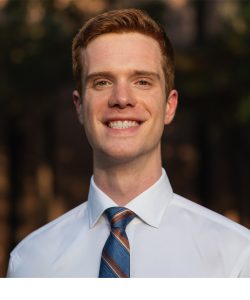


Dr. Thomas L. Jackson (Citizenship: USA). Dr. Thomas L. Jackson is a Research Scientist in the Department of Mechanical and Aerospace Engineering. Previously he was Technical Manager for the Center for Compressible Multiphase Turbulence at the University of Florida. He received his Ph.D. in Mathematics from Rensselaer Polytechnic Institute in 1985, after which he joined the staff of the Institute for Computer Applications in Science and Engineering (ICASE). From 1987 to 1992 he has been an Assistant and then an Associate Professor at Old Dominion University in the Department of Mathematics and Statistics. In 1993 he returned to ICASE for five years before moving to the University of Illinois at Urbana-Champaign. At Illinois he was a Research Professor in the Department of Aerospace Engineering and a Computational Science and Engineering Affiliate. In January 2014 he moved to the University of Florida, Gainesville, where he now works. He has co-edited two books, co-authored a textbook on hydrodynamic stability, and authored or co-authored more than 250 papers. He is currently a Fellow of APS, a Fellow of ASME, a Fellow of the Combustion Institute, and an Associate Fellow of AIAA. He has been an Associate Editor for AIAA Journal, and is currently a member of the Editorial Advisory Board for AIAA Journal of Propulsion and Power. His expertise is in the area of fluid mechanics, multiphase flows, combustion, stability, solid propellant combustion, energetic material modeling, particle packing, and the large-scale simulation.
Education
PhD, Mathematics, 1985, Rensselaer Polytechnic Institute
Teaching Interests
Rocket Propulsion, Combustion, Fluid Mechanics
Research Interests
Fluid mechanics, multiphase flows, combustion, stability, solid propellant combustion, energetic material modeling, particle packing, and the large-scale simulation.

Dr. William. E. Lear is an Associate Fellow of AIAA, recipient of the 2014 Energy Systems Award from AIAA, former Chair of the Terrestrial Energy Systems technical committee, and has served in multiple roles with the International Energy Conversion Engineering Conference, including Technical Program Chair. His areas of research are novel distributed generation systems, advanced turbomachinery, and low temperature fuel cells. He is co-inventor of the Power, Water Extraction, and Refrigeration system, a novel gas turbine-absorption refrigeration combined cycle, as well as several inventions in the area of direct methanol fuel cells.
Education
Ph.D., 1984, Stanford University
Teaching Interests
Thermal sciences, including gas turbine and fuel cell systems and the fundamental thermal sciences.
Research Interests
Novel distributed generation systems, advanced turbomachinery, and low temperature fuel cells; combustion, especially Flameless combustion; transport processes
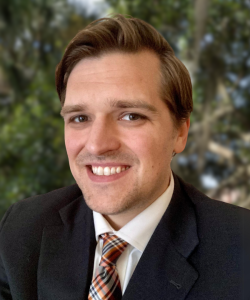

Andrés Rubiano (PhD, University of Florida; MSc, Universidad de los Andes) is an Instructional Assistant Professor in the Department of Mechanical and Aerospace Engineering at the University of Florida. He currently teaches Mechanical Engineering Design 1 and 3 (Capstone Design). He has over 12 years of combined experience in teaching high school Physics and Calculus, GRE and GMAT prep courses (Quantitative Reasoning sections), and mechanical engineering undergraduate and graduate courses, including Advanced Heat Transfer, Combustion, Computer Aided Design, Mechanics of Materials, Fluid Mechanics, and Mech Design.
Dr. Rubiano’s non-academic work experience includes the patient-specific, biocompatible and structural integrity design of cardiovascular occluders, thermal-structure Finite Element Analysis for blow-molded High-Density Polyethylene seats, countercurrent fixed-bed gasification of biomass (palm tree and coffee husk), motion-capture-based biomechanics studies for robotics applications, and most recently, heart and liver microphysiological systems (organs-on-a-chip) at the U.S. Food and Drug Administration (FDA).
Education
Ph.D. University of Florida – Mechanical Engineering with a graduate minor in Biomedical Engineering
M.Sc. (Thesis) Universidad de los Andes – Mechanical Engineering (Energy Conversion track)
B.S. Universidad de los Andes – Mechanical Engineering
Teaching Interests
Mechanical Engineering core courses: Fluid Mechanics, Heat Transfer, Mechanics of Materials, Statics, Dynamics, Thermodynamics, CAD, and Mech Design. Particular interest in Combustion, Renewable Energy, and Biology for Engineers.
Research Interests
Microphysiological systems, tissue engineering, biomechanics, organs-on-a-chip, mechanobiology, renewable energy systems, gasification, and regenerative medicine.


Professor Thakur received his Ph.D. in 1993 from University of Florida. His research interests include computational fluid dynamics, heat transfer, and combustion modeling.
Education
Ph.D., 1993, University of Florida,
Research Interests
Computational fluid dynamics, heat transfer, combustion modelling.

Education:
- Ph.D., Scientia Machina (Electrical Engineering), Brown University, 2004
- M.S., Applied Math, Brown University, 2003
- M.S., Electrical Sciences, Brown University, 2001
- B.S., Electrical Engineering cum laude, Worcester Polytechnic Institute, 1995
- B.S., Computer Science cum laude, Worcester Polytechnic Institute, 1994
Research:
- Computer Vision
- Pattern Recognition
- Image Processing
- Computational Geometry in Multiple (>2) Dimensions
Selected Publications:
- Willis, A., Computational Analysis of Archaeological Ceramic Vessels and their Fragments, in Digital Imaging for Cultural Heritage Preservation: Analysis, Restoration, and Reconstruction of Ancient Artworks, CRC-Press, pp. 323–353, 2011.
- Willis, A. and Cooper, D. B., From Ruins to Relics: Computational Reconstruction of Ancient Artifacts, IEEE Signal Processing Magazine, Vol. 25, No. 4, pp. 65–83, July 2008.
- Thomas T.P., Anderson D.D., Willis A., Liu P., Marsh J.L., Brown T.D., ASB Clinical Biomechanics Award Paper 2010 Virtual pre-operative reconstruction planning for comminuted articular fractures . Clinical Biome-chanics 2011, 26(2), pp. 109–115, February 2011. PMID:21215501. NIHMSID:259455
- Eppes, M.-C., Willis, A., Molaro, J., Abernathy, S. and Zhou B., Cracks in Martian boulders exhibit preferred orientations that point to solar-induced thermal stress, Nature Communications, 6(6712), pp. 1–11, March 2015. doi: 10.1038/ncomms7712
- Willis, A., and Brink, K., iGRaND: An Invariant frame for RGBD Sensor Feature Detection and Descriptor Extraction with Applications, SPIE Defense + Commercial Sensing; Three-Dimensional Imaging, Visualization and Display, pp. 1-15, SI16C-SI116-27, April 18-20, 2016. doi: 10.1117/12.2225540